




Author:
Philippe de Buck Director General of BusinessEurope
12 July 2010 - Issue : 893
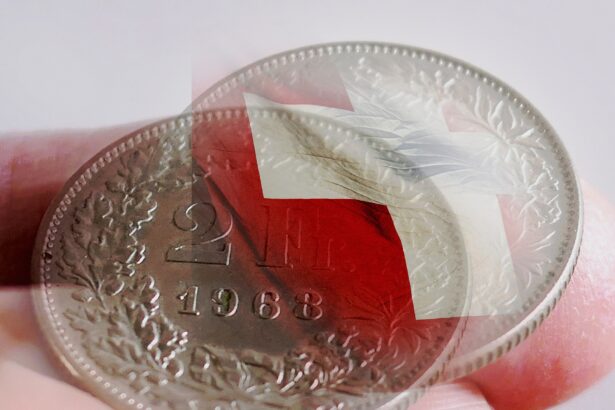
China’s strong export performance stands out as one of the principal features of today’s international trade landscape. As a result, from 2000 to 2006, China’s share in total world exports more than doubled, from 5.2 to 11.1%. With the aftermath of the global economic crisis, enhancing business between China and the EU will be one important path to accelerate global recovery. China is already the EU’s 2nd largest trading partner after the US, and Europe’s fastest growing export market. However, there is still a lot of room for improvement. For example, with € 97.6 billion compared with € 78.4 billion, the EU in 2008 still exported more goods to Switzerland than to China. Clearly, the scope for increases is great.
European companies are very keen on doing more business with and in China. But recently, European companies have become increasingly worried that business conditions in China are, in fact, deteriorating.
One particular example has been the Chinese “National Indigenous Innovation Policy” (NIIP). It is positive that the issues raised by foreign companies related to the NIIP have been recognised by the Chinese Ministry of Science and Technology, which is attempting to find an acceptable resolution. However, China has yet to provide clear legal guarantees that European and other non-Chinese companies will not be excluded from the market, whether centrally or at provincial level. The new draft regulation shows a clear improvement compared with the previous version. However, the core issue, namely how to build up a sustainable innovation capacity via open and fair competition and without restricting market access, remains untouched.
Chinese mandatory certification schemes such as the China Compulsory Certification (CCC) are a very challenging practice, which affect a broad range of industries. Apart from its very complex application, it requires companies seeking certification to provide highly confidential business information to certification bodies which are not commercially independent. Such unjustified country-only standards and related mandatory certification schemes seriously hamper business development, to the detriment of both China and the EU.
Counterfeiting and piracy is a global problem and it is therefore important that China and the EU cooperate bilaterally and multilaterally. We are encouraged that China is reviewing some key legislation in this field but the real issue here is enforcement of the rules. As the Chinese economy moves up the value chain towards an innovation-oriented economy, China’s own interest in protecting IPR becomes clearer. This is evident in the growing number of IP disputes between Chinese companies themselves.
The International Energy Agency predicts that 97% of the greenhouse gas emissions increase between now and 2030 will come from non-OECD countries. Consequently, emerging economies, and especially China, have to be committed partners in establishing binding policies with strong emissions reduction targets. Maintenance of a level playing field worldwide for industries competing internationally is crucial for the future competitiveness of European companies. China will also benefit from a coherent climate policy through greater innovation in clean technology and a cleaner environment.
In today’s globalised world, leading economies like the EU and China have to set the example by respecting the rules and pushing forward multilateral trade negotiations. This of course also includes removing rules when they are not WTO-compatible, for instance in the areas of subsidies and export restrictions on raw materials. Business counts on leadership from both the EU and China to strive towards a market-driven policy on access to raw materials, guaranteeing a level playing field. Moreover, they should join forces in order to move the Doha Round towards a successful conclusion, which should include ambitious sectoral agreements. Finally, macro-economic imbalances need to be addressed in order to avoid a repeat of the financial crisis that has thrown the world economy into disarray. We would like to see a more intense multilateral dialogue between European, Chinese and US authorities to discuss ways of reducing global imbalances and ensure the sustainable development of our respective economies.
There is a strong interest in a close economic and trade partnership with China, for example also in the field of research and development. BUSINESSEUROPE is very interested in working towards this goal. The EU-China High-Level Economic Dialogue should be better used to foster this cooperation and tackle numerous existing barriers to trade and investment. A strong economic dialogue that removes trade and investment impediments is central to the EU-China relationship. Without the stability that an open and reliable investment and market access framework brings, it will be difficult to significantly enhance business between the EU and China.
Philippe de Buck is the Director General of BusinessEurope
Cheap Ski Holidays France If you are thinking about cheap ski holidays in France then make sure you check online at Holiday Hypermarket. Our online search will check deals from the top travel agents.
Cheap Flights Miami The best way to find cheap flights to Miami and many other destinations is to shop around. Use dealchecker.co.uk to compare prices.
Jamaica Holiday Fancy a Jamaica Holiday? Then visit dealchecker.co.uk and find out what the big deal is. Book a bargain when you book online.
Mortgage Rate You can easily find out about the best mortgage rate by connecting to the expert brokers.