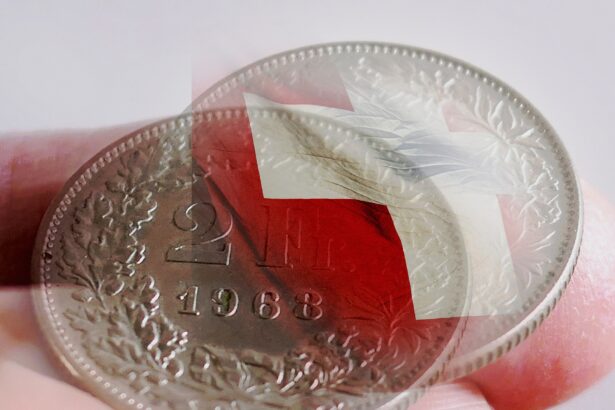





It was Greece, more precisely its fiscal crisis, that triggered the discussion for the creation of a European Monetary Fund, a new Eurozone organization that will probably be annexed to the European Central Bank (ECB,) which will act as the watchdog of the monetary zone and apply the strong measures usually needed to bring fiscal renegades, like Athens, back to normal. It must be reminded that almost all the Eurozone countries of South Europe, before joining the Eurozone, were accustomed to almost regular devaluations of their local currencies, whenever the conjuncture was negative.
The idea was that politically it was less detrimental to governments to devalue the currency than impose a strong fiscal policy to avoid deficits. Those governments were inclined to satisfy demands for more public spending and pay raises and then finance the gaps through increases of the local money circulation, that is by printing new money. When things turned sour and the competiveness of the country was taking a downturn, the government was ready to devalue the local currency in order to restore the balance.
Greece, for example, created a whole “theory” for this, not to forget that the late prime minister Andreas Papandreou was a famous professor of economics. So the value of the late drachma was “sliding” all the time in order to continuously make up for the losses of competiveness.
This arrangement was not the exception but the rule for Greece, Italy, Spain and Portugal for the decades preceding the creation of the Eurozone.
The same was true, albeit to a lesser extent, for France, Belgium and other countries.
With the advent of the euro, however, things changed completely. The machine which prints money is out of a politician’s reach. So the only thing left open to finance fiscal deficits was the issue of state bonds. But again this road was not free, because the Maasticht Treaty provided that the Member States cannot for long periods support fiscal gaps larger than 3% of the GDP. Unfortunately, there was no limit to the volume of state bond issues, because usually this financial medium is used to finance investments, and it was not wise to put limits on this. So bond issues were used not only by Greece, but by many other countries to finance their internal “political cycle,” without taking repercussions to reduce the gaps in the good times.
Those policies were encouraged by international money and capital market players, such as the Wall Street investments banks, and the general bonanza that prevailed in the world credit markets until 2007. Until the summer of that year, no borrower had to worry about anything. New loans were available whenever needed. Unfortunately, the good days are usually followed by rainy ones, and now it is almost impossible for countries like Greece to refinance their huge state debts.
This was the standard case for Third World countries and the solution was provided by the International Monetary Fund (IMF,) which intervened and straightened up the big spender with a strong diet that, however, was never applied to a “First” World countries such as Greece, Spain or Italy. On top of this, now those countries are members of the private euro club and nobody there wants “foreigners” from the IMF to intervene in their own house. So now after all that became clear, the Eurozone has discovered that it needs a European Monetary Fund. It is not a bad idea. Incidentally, along with this, many people are insisting that the ECB should create a new credit rating agency. It’s more than certain that the ECB can create both organizations, without needing to rediscover America. The ECB has the know-how and the people to look after both tasks. Actually some say that a skeleton service for both already exits within ECB and the Commission. It will be a disaster if Greek Prime Minister George Papandreou finally calls the IMF to help his country.
Barbados Holidays To some Barbados Holidays sound too good to be true. 97 kilometres of coastline make Barbados great destination for an active holiday. Visit dealchecker.co.uk for great value.
Paphos Flights For Paphos flights make sure you don't jet off until you've visited dealchecker.co.uk. By searching airlines, travel agents and tour operators you can get a great price for your flights.
Low Mortgage Rates Look beyond low mortgage rates, to be sure there are now hidden costs.
Marcus Evans Scheme Don't be a victim to the fraud. Protect your business against scams with the help of Marcus Evans scam prevention schemes.
Personal Loans We will find you the cheapest personal loan offer around. We search hundreds of loan offers to find the right one for you.
Flights to Bourgas Get amazing deals on flights to Bourgas at this site.